
The New SEO KPI: Measuring Share of Citations in AI Answers
Rankings don’t show who LLMs recommend. Learn how to measure citation share-of-voice across prompts and turn gaps into stakeholder-ready AI SEO reports.
Why rankings aren’t enough in the age of AI recommendations
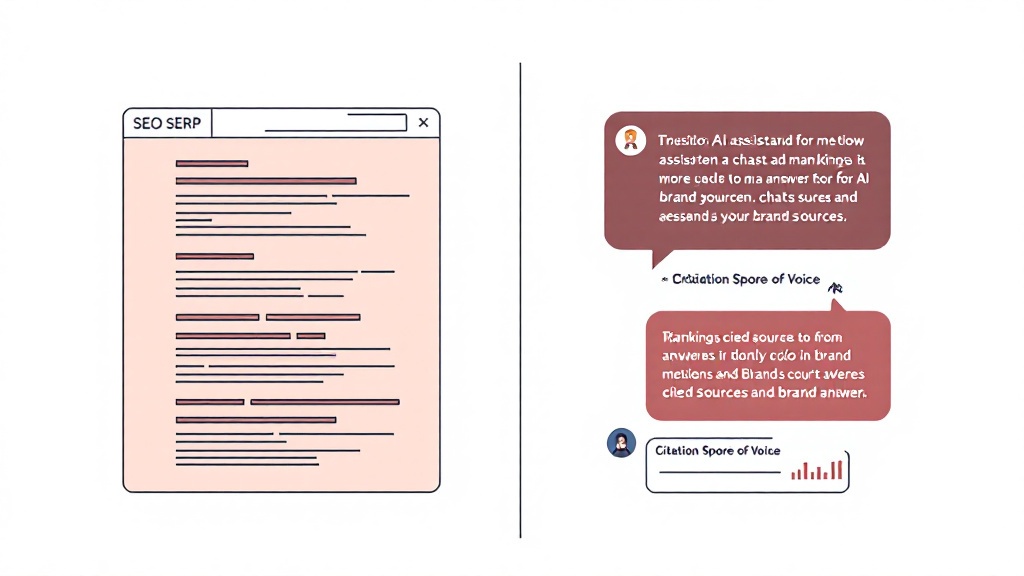
Traditional rankings still matter, but they no longer explain where demand is actually captured when users ask ChatGPT, Gemini, Perplexity, or Copilot “who’s best” or “what should I buy.” In many journeys, the click happens after a model summarizes options, names brands, and cites sources. If your site isn’t referenced, your brand visibility can drop even while your keyword positions look stable.
That’s why AI SEO needs a new KPI: share of citations in AI answers (sometimes called citation share-of-voice). Instead of asking “Are we #1 for this keyword?” you ask “Across the prompts our buyers use—by persona, location, and category—how often are we cited compared to competitors?” This reframes SEO from a page-level ranking contest into an evidence-based presence metric that aligns with how stakeholders experience the market: which brands AI systems recommend, and which sources they treat as authoritative.
How to quantify “citation share-of-voice” across prompts, geos, and personas

Start by defining a repeatable test set: prompt packs grouped by intent (e.g., “best,” “near me,” “pricing,” “alternatives”), plus modifiers for geo and persona. For example, an agency might run weekly packs for “emergency HVAC repair” across 40 cities and two personas (homeowner vs. property manager). Each run should store the full answer text, timestamp, model used, and the evidence (links, named sources, and entity mentions). That’s the foundation of credible LLMOps for marketing.
Then compute metrics stakeholders can understand. Track: (1) Citation share of voice = your citations ÷ total citations across the pack; (2) Prompt coverage = % of prompts where you’re cited at least once; (3) Competitor win map = which competitors dominate which prompt clusters; and (4) Citation quality = homepage vs. deep page, service page vs. blog, local landing page vs. directory. Package this into SEO reporting that reads like market reality: who AI recommends, where, and why.
Turning citation gaps into on-page fixes—and reports stakeholders trust
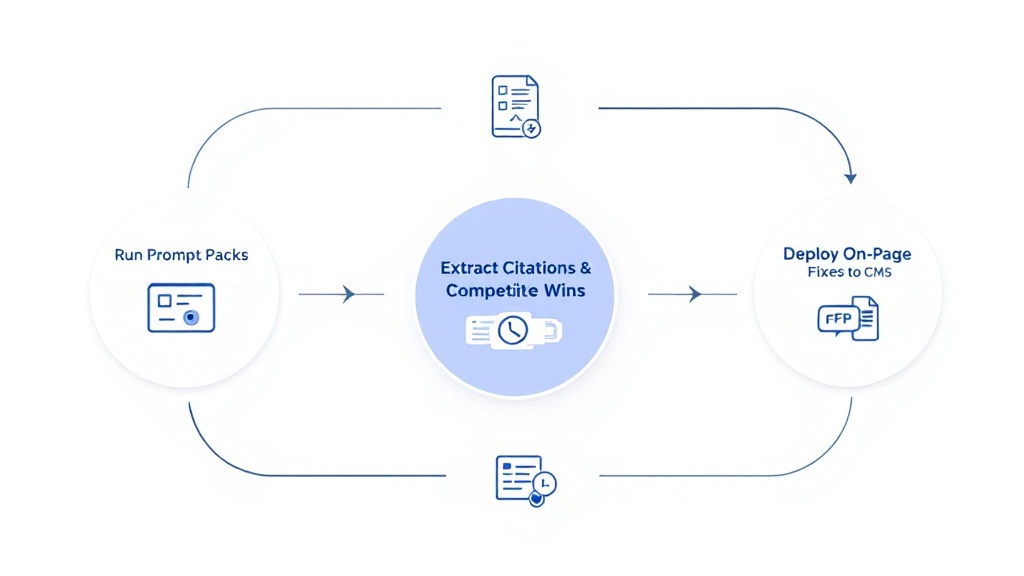
Measurement only matters if it closes the loop. When prompts show competitors being cited from FAQ-rich service pages or well-structured local landing pages, you can translate that into a prioritized fix list: tighten entity phrasing, add a pricing FAQ block, implement LocalBusiness/Service schema, improve internal links to the page AI keeps selecting, and ensure the page answers the exact question format buyers ask. This is where AI SEO becomes operational, not experimental.
The fastest path to impact is deploying changes where teams already work: WordPress, Webflow, Shopify, or a headless CMS. Tools like AnswerShare Observatory can run scheduled prompt packs, extract citations (brands, links, entities), and generate copy/paste modules or CMS-connected updates—so agencies can ship improvements across dozens of sites without reinventing a workflow. Two weeks later, you don’t just claim progress; you show it: higher citation share-of-voice, prompts that “flipped,” and pages now being referenced. That level of proof turns SEO reporting into a revenue conversation instead of a ranking debate.